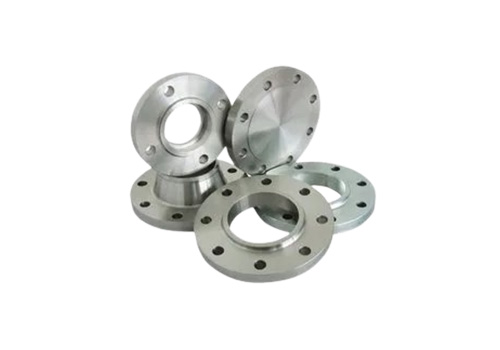
MS slip-on flanges are widely used in piping systems because they are easy to install, affordable, and convenient to work with. They are commonly found in water supply lines, utility systems, factories, and industrial plants where simple and reliable pipe connections are needed.
However, choosing the right flange involves more than just finding the correct size. Factors such as pressure rating, facing type, and material grade also affect how well the connection performs. Understanding these details helps buyers select a flange that suits their piping requirements.
An MS slip-on flange is a mild steel flange designed to fit over a pipe. Its bore is slightly larger than the pipe's outside diameter, allowing the pipe to slide through it before welding.
Mild steel is commonly used because it is affordable, easy to weld, and suitable for many general-purpose applications. Slip-on flanges are also known as SO flanges and are available in different sizes, pressure ratings, and facing types.
Material selection depends on the application. ASTM A105 is commonly used for forged carbon steel flanges, while ASTM A350 grades are available for applications requiring suitable low-temperature properties.
Installing a slip-on flange involves sliding it over the pipe, aligning it correctly, and welding it into position. Fillet welds are generally applied to both the inside and outside of the flange, following the applicable welding procedure.
The flange is then bolted to a matching flange, valve, or piece of equipment, with a suitable gasket between the faces. This allows the connection to be opened later for inspection, repairs, or equipment replacement.
Some important points to remember:
Slip-on flanges are available in different designs to suit specific piping requirements.
This is a commonly used type with a slightly raised sealing surface around the bore. The raised face helps concentrate the gasket load and is suitable for many general industrial piping applications.
A flat face flange has a level sealing surface. It is commonly used with flat-faced equipment where matching flange faces help prevent uneven loading during bolt tightening.
This flange has a specially machined groove that accommodates a metal ring gasket. It is designed for applications requiring a suitable ring-type joint connection, particularly in demanding pressure services.
A hubbed slip-on flange has a short raised section around the pipe connection. This design provides additional stiffness compared with a plain plate-style flange.
A plate flange is a simple, flat steel plate with a central opening and bolt holes. It is often selected for economical piping connections where the design and service conditions permit its use.
The specifications of an MS slip-on flange depend on the piping design and intended application.
| Parameter | Typical Details |
|---|---|
| Material | Mild steel and suitable carbon steel grades |
| Pressure class | Class 150, 300, 600 and other classes where the design permits |
| Temperature range | Depends on material grade and pressure rating |
| Standards | ASME B16.5 and other applicable standards |
| Facing types | Raised face, flat face, and ring-type joint where available |
| Nominal size | Varies by applicable standard |
| Welding | Generally fillet welding on the inside and outside |
Not every flange type is available in every size, pressure class, or facing. Always check the relevant standard and manufacturer's specifications before ordering. Pressure ratings also depend on material and operating temperature.
Easy installation: The pipe slides into the flange, making alignment and fitting relatively straightforward. This can reduce installation time on suitable piping projects.
Cost-effective option: Slip-on flanges generally cost less than comparable weld neck flanges. Mild steel also helps keep material costs manageable.
Convenient alignment: The flange design allows some flexibility during positioning, making it easier to achieve the required fit-up.
Good weldability: Mild steel is generally easy to weld when the correct materials and procedures are used.
Simpler maintenance: Since the connection is bolted, the piping can be disconnected when equipment needs servicing or replacement.
Wide availability: Slip-on flanges come in various sizes and specifications, making them suitable for many common piping requirements.
MS slip-on flanges are commonly used in piping systems where their pressure rating, material, and design meet the operating requirements.
Typical applications include:
In factories, these flanges are often found in cooling water lines, utility connections, and compressed air systems. For demanding pressure conditions or repeated stress, engineers may prefer weld neck flanges or another design better suited to the application.
Before placing an order, check these important details:
Mild steel can corrode when exposed to moisture or aggressive environments. Protective coatings may help, but stainless steel or another corrosion-resistant material could be more appropriate for certain applications.
Correct installation helps prevent leaks and reduces the chances of joint failure.
Following the applicable installation procedures is important for achieving a reliable connection.
Kolkata Pipe Fittings has been in the pipe fittings business since 1994, supplying mild steel flanges, MS pipes, elbows, tees, reducers, valves, and fasteners.
The company has its head office in Bhosari, Pune, a factory in Howrah, and a branch in Indore. This network supports customers in Pune, Talegaon, Sanaswadi, and other parts of Maharashtra.
When selecting a supplier, consider the available sizes, facing options, pressure classes, material specifications, quality checks, and delivery schedules. A supplier who understands your application can also help you identify the right specifications before you place an order.
Sourcing pipes, flanges, fittings, and valves from one supplier can make procurement easier for contractors, maintenance teams, and industrial buyers.
MS slip-on flanges remain a practical choice for many industrial piping systems because they are economical, relatively easy to install, and widely available. They work well when the flange design matches the operating conditions and installation requirements.
Before purchasing, check the pipe size, pressure class, facing, material grade, and applicable standard. These simple checks can help you avoid installation problems and choose a flange that delivers reliable performance.