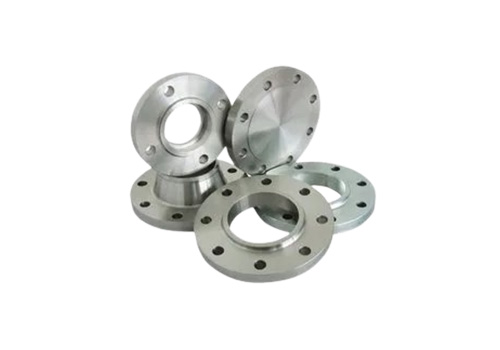
A piping system needs reliable connections to operate safely. Leaking joints can cause delays, repairs, and extra costs. Flanges connect pipes to valves, pumps, and other equipment while allowing components to be removed for maintenance. Mild steel flanges are widely used because they are affordable, easy to fabricate, and suitable for many industrial applications. Choosing the right type, material grade, and pressure rating is essential.
A flange is a circular fitting with bolt holes around its edge. It connects a pipe to another pipe or piece of equipment. A gasket between the flange faces helps prevent leakage, while bolts hold the joint together. Unlike permanent welded joints, flanged connections can be dismantled for inspection, cleaning, or replacement.
Mild steel is relatively easy to machine and weld and generally costs less than stainless or alloy steel. ASTM A105 is commonly used for forged carbon steel flanges, while suitable ASTM A350 grades are selected when low-temperature toughness is required. The correct material depends on the service conditions and project specifications.
Flange design depends on pipe size, pressure, installation requirements, and operating conditions.
A slip-on flange slides over the pipe and is welded on both the inside and outside after alignment. Its simple design makes installation relatively easy.
A weld neck flange has a tapered neck joined to the pipe with a butt weld. The design helps distribute stress more gradually between the flange and pipe.
A blind flange has no central opening. It bolts over a pipe end or equipment opening to stop flow and isolate a section of the system.
A socket weld flange has a recessed section where the pipe is inserted before being welded around the outside. It is mainly used for smaller-diameter piping when this connection type is suitable.
Other types include threaded, lap joint, orifice, ring-type joint, spectacle blind, and plate flanges. Each serves a specific purpose, so check the engineering drawing before ordering.
Specifications determine whether a flange fits the piping system and performs safely under operating conditions.
| Parameter | Common specifications |
|---|---|
| Material | Mild steel and suitable carbon steel grades |
| Material standards | ASTM A105 and applicable ASTM A350 grades |
| Pressure classes | ASME Class 150, 300, 600, 900, 1500, and 2500, where applicable |
| Dimensional standards | ASME B16.5 and ASME B16.47 |
| Facing types | Raised Face (RF), Flat Face (FF), and Ring-Type Joint (RTJ) |
| Size range | Depends on flange type and applicable standard |
ASME B16.5 generally covers flanges up to NPS 24, while ASME B16.47 covers larger-diameter steel flanges within its scope. API 605 is an older standard designation, so buyers should confirm the current project requirements. Pressure ratings depend on material and operating temperature. Check the applicable standard, dimensions, and pressure-temperature requirements before ordering.
Mild steel and carbon steel flanges are used across industries when the selected material suits the service conditions.
For example, a plant may use slip-on flanges on utility water lines, weld neck flanges on demanding process lines, and blind flanges to close unused outlets.
Mild steel flanges offer several advantages for industrial projects.
Affordable: They generally cost less than comparable stainless steel and specialised alloy alternatives, helping control costs when many connections are needed.
Easy to fabricate: Low-carbon steel is relatively easy to machine and weld using suitable procedures, simplifying installation.
Reliable strength: With the correct grade and pressure rating, these flanges can perform in a wide range of industrial applications.
Convenient maintenance: Flanged joints can be dismantled when valves, pumps, or other equipment need inspection or replacement.
Gasket compatibility: Different gasket materials and facing designs can be used when they match the fluid and operating conditions.
Range of sizes: Different sizes, pressure classes, and designs suit many piping layouts.
Mild steel can rust when exposed to moisture and oxygen. Protective coatings, regular inspections, or corrosion-resistant alternatives may be needed in demanding environments.
A flange must do more than fit the pipe. Check these points before ordering.
Discussing these details with the supplier before ordering can help prevent fitting problems, leakage, and replacement costs.
Even a suitable flange can leak if installed incorrectly. Proper preparation and inspection help keep connections reliable.
Kolkata Pipe Fittings has been in the pipe fittings business since 1994. Its range includes mild steel flanges, MS pipes, elbows, tees, reducers, valves, and fasteners.
The company has its head office in Bhosari, Pune, a factory in Howrah, and a branch in Indore. This presence may help buyers sourcing piping materials for projects in Pune, Talegaon, Sanaswadi, and other parts of Maharashtra.
When comparing suppliers, check:
Buying pipes, fittings, and valves from one supplier can simplify procurement for contractors and industrial buyers. Sharing drawings and technical requirements before ordering helps confirm that products match the intended application.
Mild steel flanges are a cost-effective option for many industrial piping systems. Slip-on flanges offer straightforward installation, weld neck flanges suit demanding applications, blind flanges close unused openings, and socket weld flanges serve suitable small-bore systems.
The key is to match the flange type, material grade, pressure rating, and facing to the application. Proper installation and regular maintenance help reduce leakage and keep piping connections reliable.